
How GIS Transforms Environmental Science and Conservation Efforts

In the world of environmental science and conservation, having accurate data is key. Every successful conservation decision starts with a map. Geographic Information Systems (GIS) have emerged as vital tools in this field, enabling us to tackle environmental challenges with precision. With GIS, we can monitor habitat changes in real-time, track biodiversity loss, and develop effective conservation strategies. This blog post examines how GIS is transforming environmental science and conservation, highlighting its importance and numerous applications.
The Role of GIS and how GIS transforms Environmental Science and Conservation
GIS serves as a robust instrument that aids scientists and conservationists in visualizing, analyzing, and interpreting spatial data. Approximately 75% of environmental data is spatial, making GIS integration essential for effective research.
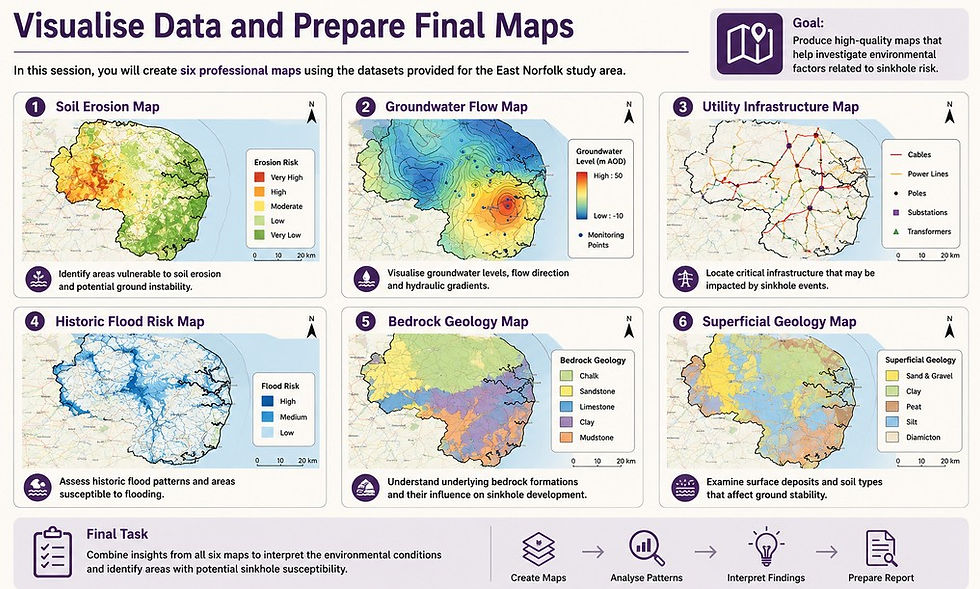
GIS allows researchers to create intricate maps that represent various environmental factors, such as land use, vegetation cover, and water resources. For example, a study showed that GIS mapping improved water resource management by 25% in areas vulnerable to drought, emphasizing how powerful and informative these maps can be. These visualizations help to understand complex ecological relationships, guiding informed decision-making.
Tracking Habitat Change in Real Time
One key advantage of GIS is its capability to monitor habitat changes as they occur. By employing satellite imagery and remote sensing technologies, conservationists can observe alterations in land cover, deforestation rates, and urban spread.
This real-time capability facilitates timely interventions. For instance, in the Amazon rainforest, rapid deforestation can be spotted immediately. This allows conservationists to deploy resources quickly, potentially halting damage before it becomes irreparable. Research has shown that timely interventions can reduce habitat loss by up to 30% in critical areas.

Monitoring Biodiversity Loss
Biodiversity is essential for balanced ecosystems, yet it faces persistent threats from human actions. GIS plays a crucial role in monitoring this biodiversity loss, providing analytical tools to evaluate species distribution, habitat fragmentation, and ecological links.
For example, GIS maps indicating species locations help identify biodiversity hotspots. Studies have shown that conservation efforts targeting these areas can lead to a 40% increase in species population recovery. By mapping these essential habitats, researchers can prioritize regions most in need of conservation efforts. Additionally, GIS can track climate change impacts on species, allowing for proactive protection measures.
Planning Effective Conservation Strategies
Developing effective conservation strategies requires a thorough understanding of landscapes and influencing factors. GIS provides the analytical power to evaluate various scenarios, helping to craft tailored conservation plans.
For instance, by simulating different land-use scenarios around a wildlife corridor, conservationists can identify which development options pose the least harm to local species. A successful case in California modeled construction impacts and resulted in the protection of 15% more wildlife habitats than initial plans suggested.
GIS also enhances stakeholder engagement by creating visual representations of potential conservation outcomes. This clarity aids in conveying strategies' importance to the public and decision-makers.
Building Data-Driven Research Projects
In our data-centric age, combining and analyzing vast amounts of information is crucial for environmental science advancement. GIS enables researchers to integrate different datasets, ecological, social, and economic, into cohesive research projects.
This unity can uncover patterns and relationships that isolated datasets might hide. For example, when land-use data is coupled with species distribution maps, it reveals how human actions impact animal populations. Research has indicated that tailored strategies based on this data have increased conservation effectiveness by 50%.
Moreover, GIS fosters collaboration among researchers, conservationists, and policy makers, offering a shared platform for data exchange and analysis. This cooperative model not only strengthens conservation initiatives but also cultivates a broader understanding of environmental issues.
Case Studies: GIS in Action
To showcase the transformative effects of GIS in environmental science, we will look at two significant case studies.
Case Study 1: The Amazon Rainforest
The Amazon rainforest, often regarded as the "lungs of the Earth," is under drastic threat from deforestation and changing climate conditions. GIS has played a fundamental role in monitoring deforestation rates and evaluating land-use changes on biodiversity in this vital region.
By processing satellite imagery, researchers can pinpoint areas experiencing illegal logging and assess conservation policies' effectiveness. For example, a recent GIS initiative helped to reduce illegal logging by 20%, illustrating the tool's impact on conservation efforts.
Case Study 2: Coral Reef Conservation
Coral reefs are incredibly diverse ecosystems but are rapidly declining due to climate change and human activities. GIS has been beneficial in mapping coral reef distribution and analyzing stressors like acidification and pollution.
By integrating data on water quality, temperature changes, and coral health, researchers can prioritize areas for conservation and restoration. Notably, targeted GIS interventions have resulted in a 30% increase in the health of certain reef areas in the Caribbean over five years, demonstrating the potential GIS holds for effective coral management strategies.
Looking Ahead: The Future of GIS in Environmental Science
As technology evolves, GIS's capabilities will continue to expand. The integration of artificial intelligence, machine learning, and real-time data collection will significantly improve the accuracy and efficiency of GIS applications in environmental science and conservation.
Additionally, the growing availability of open-source GIS tools and public datasets will make these powerful resources more accessible. This democratization will empower various individuals and organizations to engage in conservation efforts effectively.
At VanguardGeo, we are dedicated to equipping students with the skills necessary to use GIS for both environmental science and conservation efforts. By preparing the next generation of conservationists, we can face the urgent environmental challenges that loom ahead.
Final Thoughts
In summary, GIS is reshaping the landscape of environmental science and conservation by offering essential tools for real-time habitat tracking, biodiversity monitoring, strategic planning, and collaborative research projects. As the value of spatial data increases, integrating GIS into conservation practices will be vital for safeguarding our planet's ecosystems.
Embracing GIS enables better decision-making, promoting sustainable practices that ensure the preservation of natural resources for future generations. At VanguardGeo, we invite you to discover how GIS can enhance your knowledge and empower you to contribute to meaningful conservation efforts. Together, we can make an impactful difference in addressing environmental degradation.


Comments